.png?width=172&height=34&name=JSC%20(1200%20x%20240%20px).png)
.png)


On Monday, 26 Meta employees sued, alleging the company used AI systems and monitoring data to "score, rank and select" who got cut in an 8,000-person layoff. Meta denies it; a court will sort it out.
But what this lawsuit exposes is something far worse. And Meta admits it right out in the open. You may have missed it, because they buried it in a low-visibility internal post from an unknown engineer. But it's on the record: Meta tracked keystrokes and screen content across 200+ apps to train AI models, provided notice in a whisper, and offered no opt-out.
If the plaintiffs are right about how the list was scored, the employees who fed the system less got cut. The ones who fed it more stayed on to unknowingly train their replacements.
Employees everywhere are doing that math. In a Harvard/MIT experiment on 971 workers, simply telling people their work records could train AI pushed refusal to share data from 25% to 41%.
Hebbia CEO George Sivulka said it best in a16z's newsletter last week "Context hoarding is the latest job security tactic."
But how you hoard context matters. So we built a system to help you create a personal context vault that turns your intellectual property from trade secret for them to leverage for you.
Let's build it.
 |
Start documenting your processes at home, on your own time, on personal equipment. We'll show you how. AI gets what it needs and you protect your IP.
|
 |
Who knows? Maybe you'll find something worth selling. |

Meta isn't an outlier. That meeting bot on your calls? Harvard researchers point out every Otter transcript is a record of how you think through a problem -- raw material for a model.
It's already happening to people who never agreed to it: The Guardian profiled an academic editor hired to correct new "assistant editors" that turned out to be an AI system -- her fee was cut once it launched. In a CWA survey of AI data workers, 36% said they were training AI to replace their own jobs. Gartner projects 40% of enterprise apps will ship AI agents by December. Every one needs process data.
We've covered this issue before. But where previous workflows helped founders ensure company know-how survives people leaving, this one is written for the employees of larger companies that may see covert tracking come their way soon.
The question stops being "should I document?" and becomes "who owns the documentation of how I work?"
Company time makes it company property, but states like California (§ 2870) protect what you build on your own time and equipment, unless it relates to your employer's business. Keep the canonical playbook on your own machine, timestamped.
One more reason to do it yourself: capture-everything doesn't work. Meta's monitoring program is paused after an internal leak, and its CTO conceded it mostly collected the same behavior over and over. Without human context, bots can't do much. Don't give them the chance to figure it out.
It's already happening to people who never agreed to it: The Guardian profiled an academic editor hired to correct new "assistant editors" that turned out to be an AI system -- her fee was cut once it launched. In a CWA survey of AI data workers, 36% said they were training AI to replace their own jobs. Gartner projects 40% of enterprise apps will ship AI agents by December. Every one needs process data.
We've covered this issue before. But where previous workflows helped founders ensure company know-how survives people leaving, this one is written for the employees of larger companies that may see covert tracking come their way soon.
The question stops being "should I document?" and becomes "who owns the documentation of how I work?"
Company time makes it company property, but states like California (§ 2870) protect what you build on your own time and equipment, unless it relates to your employer's business. Keep the canonical playbook on your own machine, timestamped.
One more reason to do it yourself: capture-everything doesn't work. Meta's monitoring program is paused after an internal leak, and its CTO conceded it mostly collected the same behavior over and over. Without human context, bots can't do much. Don't give them the chance to figure it out.

› Your expertise becomes portable. The same document that briefs an agent briefs a freelance client, a side business, or your next team. Write once, carry it anywhere.
› You find out which processes are real. Most "processes" collapse the moment you try to write a pass/fail test for them. It's worth knowing.
› You get a durable asset with your name on it. Steps are copyable. Judgment about what "done" means needs an owner, and the person who writes and maintains the eval is holding the asset.

› Tango records your clicks and screenshots into a step-by-step guide, and Pro ($22/month) transcribes what you say as you work, adding critical context to each action. The tool then exports it all to Markdown. Capture the generalized process with dummy data to avoid involving anything proprietary to your employer..
› Notion, on a free personal workspace, holds two things: a database where every finished runbook lands, timestamped, and the Master Template page with five rigid fields:
1. Title: the specific name of the task
2. Trigger: the event that starts it
3. Inputs: the tools, data, and access required
4. Steps: numbered, active verbs
5. Definition of Done: three to five checks someone who has never done the task can grade pass/fail
› Claude turns Tango exports into finished runbooks. Create a project, attach the Master Template you just made, and pin one system prompt: "You are an operations assistant. Given a raw transcript and click log, output the Master Template and nothing else. Numbered steps, active verbs, no filler. If a step is ambiguous in the source, write UNCLEAR rather than inferring.
› To run it: Capture in Tango while talking through it, drop the Markdown into Claude, save the output to your Notion database, grade it against the Definition of Done -- and regrade after every model release, because your pass rate is how you find out a new model broke your process. Done right, an agent completes the process end-to-end with no clarifying questions on 8 of 10 runs, and someone who has never done the task can grade the output in under two minutes. When a process holds up, sell it: a template, a workshop, a paid audit (check your moonlighting clause first). Revenue is the strongest timestamp there is.
› Notion, on a free personal workspace, holds two things: a database where every finished runbook lands, timestamped, and the Master Template page with five rigid fields:
1. Title: the specific name of the task
2. Trigger: the event that starts it
3. Inputs: the tools, data, and access required
4. Steps: numbered, active verbs
5. Definition of Done: three to five checks someone who has never done the task can grade pass/fail
› Claude turns Tango exports into finished runbooks. Create a project, attach the Master Template you just made, and pin one system prompt: "You are an operations assistant. Given a raw transcript and click log, output the Master Template and nothing else. Numbered steps, active verbs, no filler. If a step is ambiguous in the source, write UNCLEAR rather than inferring.
› To run it: Capture in Tango while talking through it, drop the Markdown into Claude, save the output to your Notion database, grade it against the Definition of Done -- and regrade after every model release, because your pass rate is how you find out a new model broke your process. Done right, an agent completes the process end-to-end with no clarifying questions on 8 of 10 runs, and someone who has never done the task can grade the output in under two minutes. When a process holds up, sell it: a template, a workshop, a paid audit (check your moonlighting clause first). Revenue is the strongest timestamp there is.

Full disclosure: Projects like this are what JSC is here for. If you want a hand standing it up, book a 30-minute intro call.


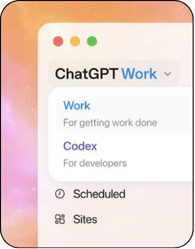

OpenAI released ChatGPT Work on July 9, an agent built on GPT-5.6 that pulls context from a user's connected apps and files to generate websites, reports, spreadsheets, and presentations -- and can field complex tasks for hours at a time. Learn More...


On June 4th, just before Senate Majority Leader Andrea Stewart-Cousins closed the legislative session, the state body passed A6578-B, requiring AI developers to publish documentation of their training datasets by January 1, 2027. An earlier version required employers to notify workers when their data trained AI models; that section was stripped before passage. Learn More...


Governor Ned Lamont signed Public Act 26-15 on May 29. Starting October 1, employers filing WARN Act layoff notices must disclose whether the cuts relate to their use of AI, and the law specifies that using AI in employment decisions is not a defense against discrimination claims. Learn More...
Photo credits: “Ned Lamont and John Bonifaz” by matthewnstoller, cropped, licensed under CC BY 2.0