.png?width=172&height=34&name=JSC%20(1200%20x%20240%20px).png)





First things first: This is an AI-led build, meaning if you connect the right tools, you can accomplish this entirely within Claude or ChatGPT. But you gotta know how to prompt it. I included my prompt file for subscribers only so if you are interested in perks like this, make sure you sign up. Subscribe now!
In the first four months of 2026, 68% of Google searches ended without a click (SparkToro, June 2026). The advice that followed was unanimous: the clicks are gone, so stop fighting for the search results page and start fighting to get cited inside the AI answers instead.
Smart SEOs have been screaming ever since. Now, I am not one of those people saying AEO is just good SEO. But traditional SEO still has a place.
First of all, users don't trust AI. The Trade Desk and PA Consulting surveyed buyers across the US and UK and found 95% double-check AI-generated results against other sources, and 88% won't rely on AI alone for a major decision. People let AI run the informational part of the search process--the part your blog posts used to get traffic from.
Once they're close to spending, however, they verify what AI told them, getting a look under the hood at the products and concepts they learned about. And that's where you need to be.
Blue links aren't dead. They changed jobs.
Which is what led me back to one of my favorite Traditional SEO strategies: the Skyscraper Technique.
Published by Brian Dean of Backlinko back in 2015, the strategy is simple: find content that's already earning links and ranking, build something better, and dethrone the weaker version. What's new is that its three manual steps can now be completely automated. Got an SEO platform you query by API, an MCP that drafts into your CMS, and an AI in the middle? You can do this all right now.
Let's rebuild it.
 |
Find a keyword with beatable content — old, poor match, bad design — pull backlink list, out-build it with Claude, and draft it straight into your CMS.
|
 |
SEO software MCP handles research. An afternoon to wire it up. Repeatable. |

MThe reason to run this now isn't nostalgia for 2015. It's that the traffic traditional search still sends is worth more per visit than it used to be.
Semrush tracked it: a visitor arriving from AI-assisted search converts at 4.4 times the rate of an average organic visitor. That's because AI is acting as a filter for the literally millions of informational searches that used to surface branded blog content. That would be a disaster, except people don't trust AI. So there's a step 2.
AI-filtered searchers are using blue links for AI verification. And the interactions and success stories will be rewarded with more AI citations in the future. Our SEO platform SE Ranking studied 216,000 pages to see what actually predicts an AI citation, and the strongest single predictor was referring domains — the exact asset this method builds.
Pages ranking in Google's top positions got cited more; pages updated in the last three months got cited more than stale ones. Their conclusion: the two systems "evaluate authority and content quality similarly." So the page you build to take a high-intent search result is also the page you've made likelier to be the one the AI quotes. You're not picking a side between AI and traditional — you're doing the single piece of work that feeds both.
To get a deeper dive into this, check out our companion post.
Semrush tracked it: a visitor arriving from AI-assisted search converts at 4.4 times the rate of an average organic visitor. That's because AI is acting as a filter for the literally millions of informational searches that used to surface branded blog content. That would be a disaster, except people don't trust AI. So there's a step 2.
AI-filtered searchers are using blue links for AI verification. And the interactions and success stories will be rewarded with more AI citations in the future. Our SEO platform SE Ranking studied 216,000 pages to see what actually predicts an AI citation, and the strongest single predictor was referring domains — the exact asset this method builds.
Pages ranking in Google's top positions got cited more; pages updated in the last three months got cited more than stale ones. Their conclusion: the two systems "evaluate authority and content quality similarly." So the page you build to take a high-intent search result is also the page you've made likelier to be the one the AI quotes. You're not picking a side between AI and traditional — you're doing the single piece of work that feeds both.
To get a deeper dive into this, check out our companion post.

› A built-in backlink outreach list. The incumbent's referring domains are prospects who've already shown they'll link to content on this topic.
› Real, measurable progress. Because the research and post building is being spearheaded by AI, you can benchmark what success would look like by simple rank tracking, coupled with keyword volume and traffic.You can also stress-test the hypothesis that this method leads to higher-intent visits.
› Compounding AI visibility. The authority you build to rank is the same authority that makes AI likelier to cite you.

Prerequisites: SE Ranking with API access · Claude with the SE Ranking and HubSpot MCPs connected · HubSpot Content Hub.
› Step 1: Find the beatable target (SERanking): Weight candidates toward commercial intent, not raw volume. Then, surface results held by beatable editorial. Three signals a page is beatable::
1. It's outdated: the ranking piece is two-plus years stale on a topic that has moved.
2. It's thin or ugly: no depth, no visuals, clearly phoned-in.
3. It doesn't deliver on the keyword: the strongest signal of all. A catch-all post that ranks for a term it barely addresses, usually a long-tail phrase it caught by accident. Long-tail is where the ready-to-buy searchers are.
Once you've got one, pull the incumbent's referring domains — your outreach list, captured before you write. Pro Tip: if your SEO software has onboard AI chat or an MCP or API, the AI can handle this research in a fraction of the time.
› Step 2: Cluster by search results overlap (SERanking): Check which nearby keywords share the same top results and group them, so one pillar post targets the primary term plus the secondaries it will rank for anyway. One asset, many terms.
› Step 3: Outbuild it (Claude): Feed Claude the incumbent's content, the current results, and SE Ranking's related questions. Cover every subtopic the incumbent covers, add the ones it misses, and answer the search intent outright. In 2015, "better" meant "longer"; in 2026 it means more current, more complete, and actually delivering on the term.
› Step 4: Draft into CMS (HubSpot): Have Claude push the piece through the MCP as a draft — keyword-optimized title and meta included. You add images and final edits in HubSpot. Just be careful you don't overwrite a post without giving AI a heads up on any changes you made without it; you'll wipe out your current version. SadIy, I know from experience 😩
› Next Steps: By capturing the incumbents backlink profile, you have a built a great link building strategy. Between that list, rank tracking, traffic improvements and visitor engagement, you should be able to track progress pretty easily.
› Step 1: Find the beatable target (SERanking): Weight candidates toward commercial intent, not raw volume. Then, surface results held by beatable editorial. Three signals a page is beatable::
1. It's outdated: the ranking piece is two-plus years stale on a topic that has moved.
2. It's thin or ugly: no depth, no visuals, clearly phoned-in.
3. It doesn't deliver on the keyword: the strongest signal of all. A catch-all post that ranks for a term it barely addresses, usually a long-tail phrase it caught by accident. Long-tail is where the ready-to-buy searchers are.
Once you've got one, pull the incumbent's referring domains — your outreach list, captured before you write. Pro Tip: if your SEO software has onboard AI chat or an MCP or API, the AI can handle this research in a fraction of the time.
› Step 2: Cluster by search results overlap (SERanking): Check which nearby keywords share the same top results and group them, so one pillar post targets the primary term plus the secondaries it will rank for anyway. One asset, many terms.
› Step 3: Outbuild it (Claude): Feed Claude the incumbent's content, the current results, and SE Ranking's related questions. Cover every subtopic the incumbent covers, add the ones it misses, and answer the search intent outright. In 2015, "better" meant "longer"; in 2026 it means more current, more complete, and actually delivering on the term.
› Step 4: Draft into CMS (HubSpot): Have Claude push the piece through the MCP as a draft — keyword-optimized title and meta included. You add images and final edits in HubSpot. Just be careful you don't overwrite a post without giving AI a heads up on any changes you made without it; you'll wipe out your current version. SadIy, I know from experience 😩
› Next Steps: By capturing the incumbents backlink profile, you have a built a great link building strategy. Between that list, rank tracking, traffic improvements and visitor engagement, you should be able to track progress pretty easily.

The part of this that trips people up is the plumbing — getting SE Ranking, Claude, and HubSpot actually talking to each other so the workflow runs end to end. That's something I set up for clients: connect your tools to Claude and hand you working methods for using those connections from day one. If you'd rather start with the wiring done, book a 30-minute intro call.




Since 2024, Google has paid Reddit about $60M a year to train its AI on Reddit's content. But with the deal up for renewal, and Reddit publicly claiming its only getting non-logged-in visits, the company is reportedly weighing whether to walk unless Google pays to offset the loss. Learn More...
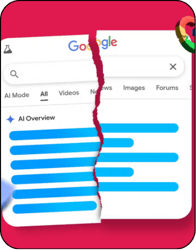

New Search Console guidance clarifies that excluding your content from AI Overviews and AI Mode does not affect how you rank in standard organic search — settling a question that had publishers afraid to opt out. Translation: your traditional ranking is a separate lever you still control. Learn More...


As of July 1, Cloudflare began blocking mixed-use AI crawlers by default on ad-supported pages (effective September 15) and expanded its marketplace so publishers can charge AI companies for access. The goal is simple: make AI pay for the content or lock it out. Learn More...